
Loop vs. tube resistance bands: which setup fits you?
Choose by the exercise and attachment you need. Long loops are continuous bands, mini loops are short closed bands, and tube kits commonly use handles or clips. None is the right choice for every movement.
By Band team
Published 3 min read
Updated
Practical guidance from the Band team.
Compare the shapes first
“Loop band” can describe very different products. A small loop used around the legs is not a substitute for a long loop used for a standing pull.
| Band type | How to recognize it | What to check |
|---|---|---|
| Long loop | A long, continuous flat band | Length, grip, and the exercise’s required anchor |
| Mini loop | A short closed ring, often latex or fabric | Fit, movement range, and placement in the demonstration |
| Tube with handles | Elastic tubing with attached or removable grips | Clips, handles, anchor compatibility, and manufacturer limits |
When handles are useful
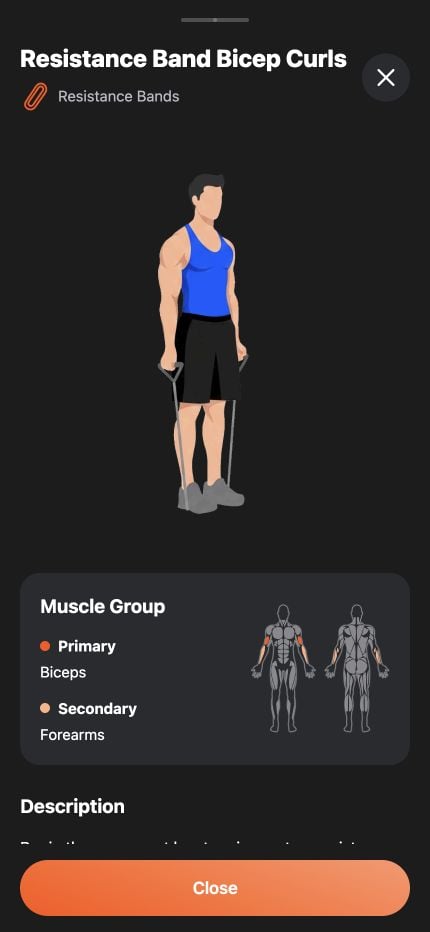
Handles provide a defined grip for movements such as curls and presses. Check whether an exercise needs a band under the feet or an external anchor. A kit having an anchor does not mean every door or fixture is suitable.
When a mini loop is the matching setup
Mini loops can be used in movements such as lateral walks and clamshells. Their short circumference changes the setup. Follow the pictured placement and instructions rather than copying a long-loop exercise with a short band.
Fabric and latex loops can feel different and allow different ranges. Choose the equipment that fits the movement and follow its care instructions.
Why color and weight labels are not enough
Colors are not standardized across brands. A printed resistance value may refer to a particular stretch or a range, so it should not be treated as an exact dumbbell equivalent. Consult the manufacturer’s rating method before comparing products.
Three examples from the actual Band library
A band’s shape is only the first filter. The exercise also determines placement, clearance, and whether the band needs handles. Use these examples to see why a short loop cannot simply replace a tube in every routine.
| Band exercise | Illustrated equipment | Check before choosing |
|---|---|---|
| Bicep curls | Handled band under the feet | The grip and under-foot placement match your equipment |
| Lateral band walk | Short loop around the thighs | There is clear space to step sideways |
| Clamshell | Short loop around the thighs | There is space to lie on your side |
Choose the movement, then the band
Before buying another band, list the exercises you want to do and check their equipment requirements. Our website identifies the setups shown in the app; it does not certify every band brand or attachment system.
See the Band equipment guideBefore you train
Choose an amount of exercise that suits your current ability. Stop for pain, dizziness, or unusual breathlessness. If an injury or health condition affects exercise, seek advice from a qualified health professional.
Your next session starts here.
Take what you learn into BAND with guided workouts, interval timers, and voice cues.
Keep learning
Training guides3 min read
Resistance bands for beginners: start with your setup
Learn how to identify your resistance band, preview exercises, and choose your first guided workout in Band.
Equipment3 min read
Build a home gym with resistance bands
Plan a compact resistance band workout space, check equipment requirements, and choose exercises for the setup you actually own.
Training principles3 min read
What is variable resistance training? A practical band guide
Learn how band stretch changes resistance, why setup matters, and how to compare sessions without treating band labels as exact weights.
Equipment comparisons3 min read
Resistance bands vs. cable machines: what changes?
Compare band and cable resistance, anchors, load selection, and movement setup before choosing exercises for home or the gym.